
Men's Facials Differ From Women's Facials in Key Ways
Pristine Spas
Curious about facials for men in Central Florida? Learn what changes, what happens in the room, and which facial to book first.
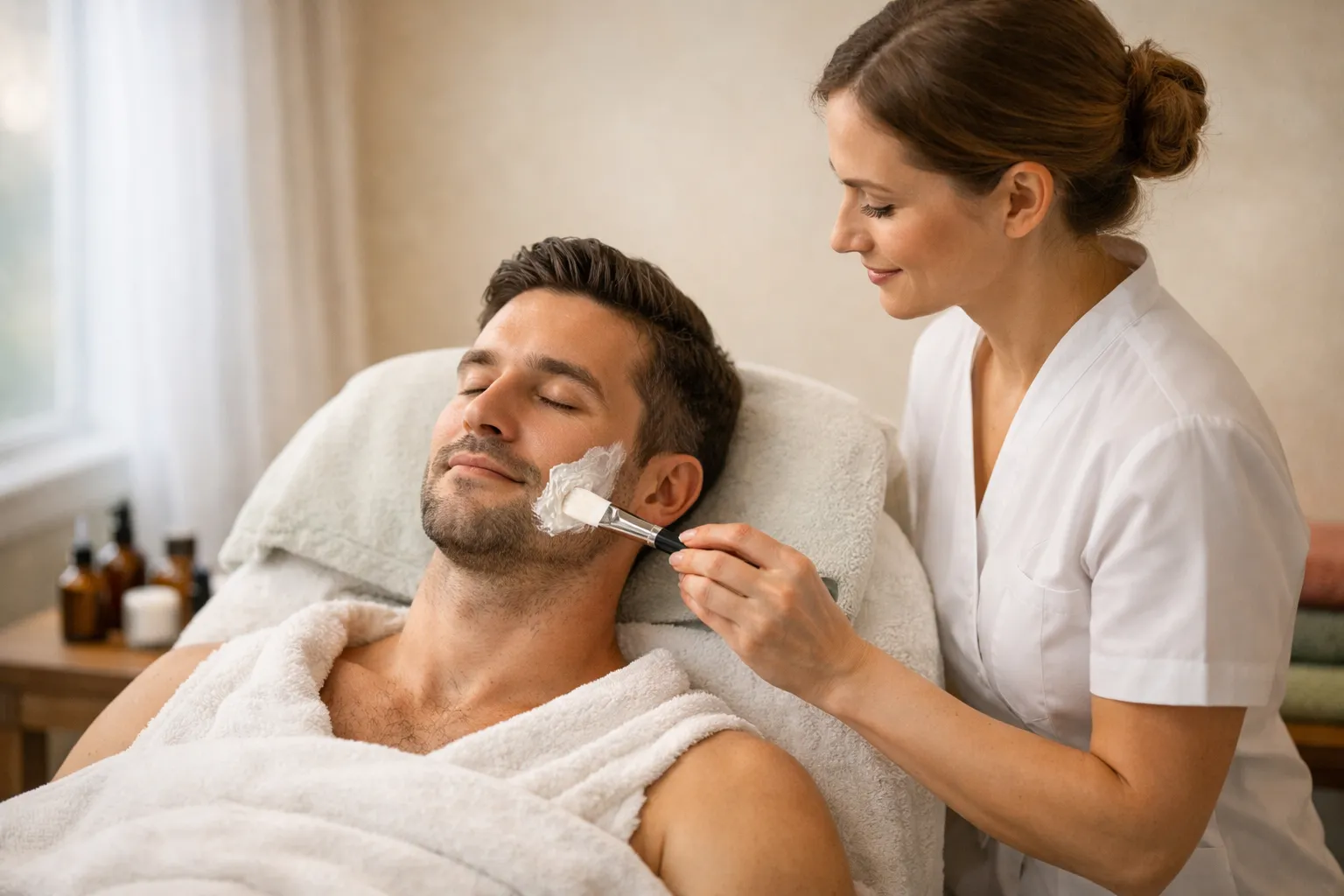
TL;DR: Men's skin has real structural differences that change how a facial is performed, but the service menu is the same. Most first-timers do well with a custom or classic facial, and the esthetician adjusts the whole treatment once they see your skin in person.
There's a version of this question that comes up all the time at the front desk: "Is a facial just for women?" The short answer is no. The longer answer is that men's skin behaves differently enough that it's worth knowing what your esthetician is working with before you walk in.
If you've been curious but kept putting it off, this is the rundown you need. No jargon, no pressure. Just what happens and why it helps, plus how to pick the right one for you.
How Men's Skin Is Actually Different
Men's skin tends to run thicker and oilier than women's skin of the same age, and it is also more prone to congestion. Testosterone drives sebum production, which means larger pores and a higher likelihood of blackheads, breakouts can persist well into adulthood.
Shaving adds another layer of complexity. Daily or near-daily shaving creates low-grade friction on the skin, which can cause:
- Ingrown hairs along the jaw and neck
- Chronic redness or irritation in the beard zone
- Rough texture from accumulated dead skin cells
- Sensitivity that shows up unpredictably
Men also tend to use fewer skincare products at home, which means more buildup arrives at the appointment. That's not a criticism. It's just useful context for understanding why a first facial sometimes yields noticeable results quickly.
What Changes in the Room
A facial for men follows the same basic arc as any other facial: cleanse, exfoliate, extract, treat, hydrate, protect. What changes is how the esthetician works through each step.
Here's what adjusts:
- Extraction focus shifts. The T-zone and beard line often carry the most congestion, so more time goes there.
- Exfoliation is calibrated to thicker skin. Men's skin can typically tolerate a slightly more aggressive pass on exfoliation without irritation, though this depends entirely on the individual.
- Products chosen around shaving habits. If you shave daily, your esthetician will note that and avoid anything that would leave the skin compromised right before your next shave.
- Sensitivity check around the beard zone. Some men have soft, reactive skin under facial hair that gets little air and product attention. The esthetician will assess before applying anything.
Nothing about the experience requires you to explain your skin history in detail upfront. The intake form handles most of it, and your esthetician will ask the rest before the treatment starts.
Which Facial to Book First
If you've never had a facial, the most practical starting point is a custom or classic facial. It gives the esthetician enough flexibility to address whatever they find without locking you into a protocol designed for a specific concern.
After that first visit, you'll have a clearer picture of what your skin actually needs. From there, a few directions are common:
If congestion and breakouts are the main issue: An acne-focused facial uses different chemistry to clear pores and calm inflammation. It's not aggressive, but it is targeted. You'll likely be advised to avoid shaving the day of.
If your skin looks dull or uneven: A HydraFacial uses a vacuum-tip device to pull out debris and infuse hydrating serums at the same time. It works well on thicker skin because the suction step is effective on larger, more stubborn pores. Many men find this one works efficiently for them.
If you're dealing with rough texture or dry patches: A hydrating facial with enzyme exfoliation can soften the surface without stripping it. Florida humidity masks dryness sometimes. Indoor air conditioning does the opposite, pulling moisture from the skin all day.
One thing to keep in mind: the right facial isn't always the most intensive one. A solid custom facial from a skilled esthetician will often outperform a specialty treatment booked on a hunch.
How to Prep and What to Expect After
Prep is minimal. A few things that make a difference:
- Shave the morning of your appointment, or the night before. Not right before you arrive.
- Skip any new skincare products for two to three days leading up. If something reacts, you want to know what caused it.
- Mention any medications you're taking on the intake form. Some topical and oral medications affect how skin responds to exfoliation.
- Arrive without a full layer of sunscreen or heavy moisturizer. Your esthetician will remove it, but starting clean saves time.
Afterward, your skin may look slightly pink for a few hours, especially around areas where extractions were done. This is normal and usually fades by that evening. What to avoid for 24 to 48 hours:
- Direct sun exposure without SPF
- Hot showers immediately after
- Heavy gym sessions that produce a lot of sweat (the first few hours are the most sensitive)
- New skincare products you haven't used before
If you shave the day after, go gently. The skin's barrier is a little more open than usual.
How Often Should Men Get Facials
Skin turns over roughly every four weeks, so monthly is a sensible cadence if you want to stay ahead of buildup. That said, many men start with a one-time visit to see how their skin responds before committing to anything.
If your main concern is a specific event like a wedding or a photo shoot, or perhaps a family reunion, working backward from that date matters. A single facial two weeks before the event is a reasonable plan. A series of two or three spaced out over six to eight weeks gets you further.
If you're managing an ongoing concern like persistent congestion or sun damage, or dealing with ingrown hairs along the jaw, a consistent schedule makes the biggest difference. Your esthetician can suggest a cadence based on what they observe at that first appointment.
Frequently Asked Questions
Do facials hurt for men? Most of the treatment is comfortable. The extraction step, where the esthetician clears clogged pores, can involve brief pressure, and heavily congested pores may also cause mild stinging. It's manageable for most people and over quickly. If anything feels too intense, you can always ask the esthetician to adjust.
Can men with beards get a facial? Yes. A beard doesn't prevent the treatment. The esthetician will work around it and pay attention to the skin at the beard line, which often gets the least care at home. If your beard is long, you may want to trim it beforehand so the esthetician has better access to the skin beneath.
Is a HydraFacial better for men than a regular facial? Not automatically. A HydraFacial is a good fit if congestion and dullness are both present, because the suction and infusion steps address both at once. A custom facial gives more flexibility for first-timers. After one session, you and your esthetician will have a better read on which direction makes more sense.
How is a facial different from just washing your face well at home? A facial goes deeper. Cleansing at home removes surface debris. A facial uses professional-grade exfoliation, steam to open pores, manual or tool-assisted extractions, and pharmaceutical-grade treatment products that aren't available over the counter. The difference in what gets cleared out in one session is significant, especially if it's your first time.