
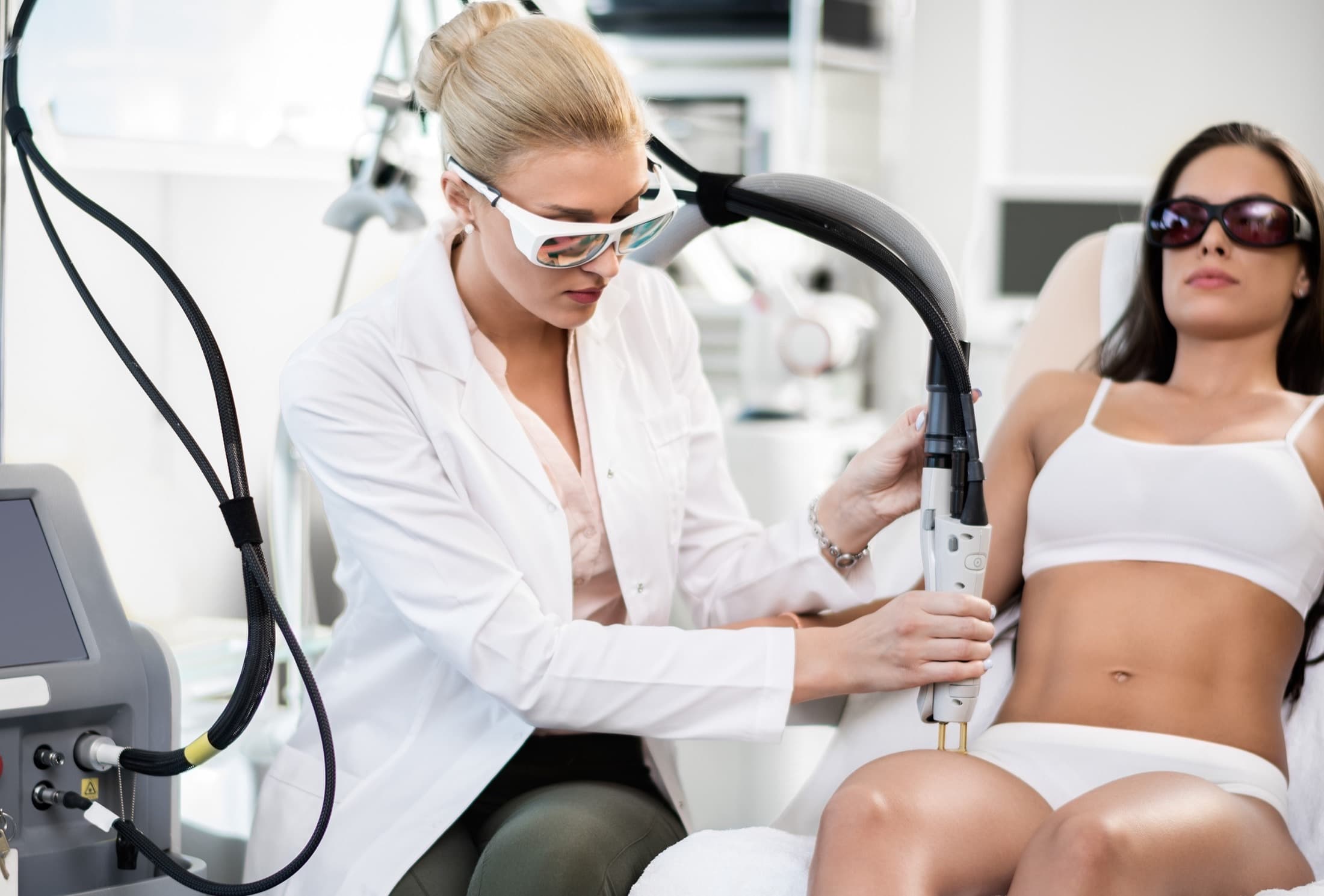
Electrolysis
Breathe. Relax. Let go. Electrolysis is the only FDA-recognized method of permanent hair removal — and the only option that works on every hair color and every skin tone. Laser misses gray, blonde, red, and white hair. Electrolysis doesn’t.


Electrolysis has been around since 1875. It’s older than laser, slower than laser, and in certain situations the only thing that actually works. A fine probe slides into each individual hair follicle, delivers a small electrical current that destroys the growth cells at the root, and the hair is removed. Repeated across each follicle, across multiple growth cycles, and the hair is gone — permanently.
It’s not glamorous. It’s not fast. But for the right client — gray hair, blonde hair, red hair, hormonal hair, areas laser can’t safely treat, or anyone who wants permanence — electrolysis is the right tool.
What Makes Pristine Electrolysis Different
Licensed electrologists.
Florida requires specialty licensure for electrolysis — not a general esthetics license. Our practitioners hold those credentials.
Right tool for the job.
We don’t push electrolysis when laser is faster and cheaper. We don’t push laser when electrolysis is the only thing that will work.
Honest timeline conversations.
We tell you upfront how long this will actually take. No fake “5-session” promises.
Three modalities available.
Galvanic, thermolysis, and blend — matched to your hair type and skin.
Sterile, single-use probes.
Non-negotiable.
How Electrolysis Works
A sterile probe — finer than the hair itself — is inserted into the follicle alongside the hair shaft, down to the root. A brief electrical current is applied. The current destroys the dermal papilla (the cells that produce hair) through one of three mechanisms:
Galvanic
Direct current creates a chemical reaction (sodium hydroxide) that destroys the follicle. Slower per hair, very effective.
Thermolysis
Alternating current heats the follicle. Faster per hair.
Blend
Combination of both. Often the most effective for stubborn hair.
The treated hair is lifted out with tweezers — no pulling, no resistance if the follicle was properly disabled. The skin shows brief redness and possibly small bumps that resolve within hours to a day.
If you have dark hair on light-to-medium skin and you want a large area cleared, laser is faster and more cost-effective. If you have any hair color laser misses, or you want true permanence on a small area, electrolysis is the answer.
What Electrolysis Treats
- Facial hair — chin, upper lip, cheeks, sideburns, neck
- Brows — shaping and stray hair
- Underarms
- Bikini and Brazilian
- Hands and fingers
- Toes and feet
- Stomach, chest, back (smaller patches — larger areas often go to laser first)
- Hormonal hair — PCOS, menopause, hair that returned after laser
- Hair laser missed — gray, white, blonde, red, fine vellus
- Transgender clients — facial and body hair removal as part of transition care
Benefits
- True permanent hair removal — not just reduction
- Works on every hair color and skin tone
- Treats individual stubborn hairs laser can’t
- Effective on hormonal hair changes
- No melanin-related restrictions or risks
- Precise — perfect for shaping brows, hairlines, and sensitive areas
Who Comes to Pristine for Electrolysis
- Clients laser couldn’t treat — gray, blonde, red, white, or fine hair
- Darker skin tones where laser carried too much risk
- Post-laser cleanup — finishing what laser started
- Hormonal hair (PCOS, menopause, post-pregnancy)
- Brow shaping and hairline detail work
- Transgender clients pursuing permanent facial or body hair removal
- Anyone who wants permanence without ambiguity
What to Expect During Your Appointment
- Intake and consultation. Hair growth pattern, medical history, medications, prior hair removal, expectations.
- Skin cleanse and prep. Area is cleaned and disinfected.
- Treatment. Single-use sterile probe, hair-by-hair work in the treatment area. Sensation: brief pinch or warmth at each follicle.
- Treated hair is lifted. No tweezing required if the follicle was properly disabled.
- Soothing post-care. Cooling agent, calming serum.
- Next session scheduled. Hairs grow in cycles — different follicles are active at different times. Multiple sessions across months are required to catch every follicle in the right phase.
Session length: 15 minutes (small area like upper lip) up to 60 minutes (chin, larger areas).
Pre-Treatment Prep
- Do not wax, tweeze, thread, or epilate for 1–3 weeks before — hair must be in the follicle to be treated
- Shaving is fine and encouraged a few days before so we can see growth
- Avoid caffeine the day of (sensitivity)
- No alcohol 24 hours before
- Avoid sun and tanning beds on the area for 1 week before
- No retinol or actives on the area for 3 days before
- Show up with clean, makeup-free skin
Post-Treatment Care
First 24 Hours
- Avoid touching the area
- No makeup directly on treated skin for 12–24 hours
- No workouts, sweating, sauna, hot showers
- No swimming pools or hot tubs
- Skin will be pink, possibly with small bumps — normal
Days 2–7
- Gentle cleanser only on the area
- SPF 30+ daily
- No exfoliating, retinol, or actives until skin is fully calm
- No waxing, tweezing, or threading between sessions — only shaving
Between Sessions
- Shave only when needed
- Stick to your scheduled cadence — hairs caught in the wrong growth phase don’t get disabled
Realistic Expectations — Read This
Electrolysis is a commitment. Hair grows in three cycles — anagen (active), catagen (transition), and telogen (rest). Only anagen hair can be permanently disabled, and only about 30% of hair is in anagen at any given time. That’s why you need multiple sessions over months to a year-plus, depending on the area and your hair density.
For a small area like the upper lip: expect every-1-2-week sessions for several months, tapering as growth thins. For larger or denser areas (chin, full beard, back): expect 12–24+ months of consistent treatment.
The result is permanent. The path takes time. Anyone promising “5 sessions and done” for electrolysis on a dense area is selling, not telling.
Who’s a Candidate — and Who Isn’t
Good Candidates
- Anyone with unwanted hair, regardless of color or skin tone
- Clients who tried laser and want to clean up what’s left
- Hormonal hair patients
- People who want permanence over speed
Not a Candidate Right Now
- Active skin infection or irritation in the area
- Pregnancy (typically deferred — clear with your doctor; some areas are still treated)
- Active acne or open wounds in the area
- Pacemaker or certain implanted electronic devices — disclose at consultation, modality choice may be affected
- Recent isotretinoin (Accutane) use — wait 6 months
- Bleeding disorders — clear with your doctor
- Certain skin conditions causing healing issues
Waxing manages hair. Electrolysis ends it.
Treat Now, Pay Later
We offer flexible financing through Cherry, CareCredit, and Allē so cost doesn't stand between you and the treatment you want. Apply online before your appointment or ask at booking.
View Payment PlansLong-term electrolysis treatment plans add up. Break larger packages into monthly payments with Cherry, CareCredit, or Allē. Soft credit check, decisions in seconds, no hit to your score to apply.
Our licensed estheticians are trained at Pristine Beauty Academy, our own accredited school offering esthetics, laser, and nail licensing programs in the Central Florida area. Pristine Beauty Academy
Electrolysis requires specialty Florida licensure beyond general esthetics. Many of our licensed estheticians trained at Pristine Beauty Academy, our accredited esthetics, laser, and nail school — but electrolysis is its own credential, and only properly licensed electrologists perform this service at Pristine.
Frequently Asked Questions
Para Nuestros Lectores en Español
La electrólisis es el único método permanente de eliminación de vello reconocido por la FDA — y el único que funciona en todos los colores de cabello y todos los tonos de piel. Tratamos cabello cano, rubio, rojo, y vello hormonal que el láser no puede eliminar. Sesiones individuales con electrologistas licenciados. Respira, relájate, y déjate llevar.
Related Services
Pristine’s electrolysis pairs with our other hair removal and esthetics services.
Laser Hair Removal
Faster option for dark hair on lighter to medium skin. The right tool for larger areas.
Waxing
Temporary removal between or instead of permanent options.
Brow Services
Pair electrolysis with shaping and tinting for permanent brow detail work.
Acne Facial
For clients addressing both unwanted hair and skin concerns.
Book Electrolysis at Your Location
Electrolysis is available at all three Pristine Spas locations. Choose yours to book.
Permanent. Honest. Worth the Time.
Electrolysis is slow. It’s also the only thing that works on hair laser misses, and the only thing the FDA recognizes as truly permanent. If that’s what you need, that’s what we do — with licensed electrologists and an honest timeline. If you want it done right, you make the trip to Pristine.