
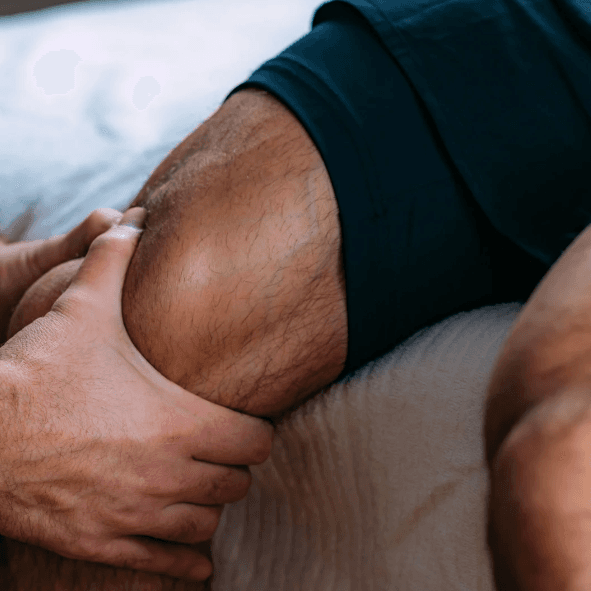
Sports Massage
Breathe. Relax. Let go. Sports massage is performance bodywork — built for athletes, not relaxation. Pre-event activation, post-event flushing, mid-training recovery, and injury prevention. Faster, more targeted, and more functional than deep tissue. Different goal, different technique, different result.


Sports massage isn’t deep tissue with a gym bag in the corner. It’s a distinct discipline focused on athletic performance, recovery, and injury prevention — with techniques and pacing that change depending on where you are in your training cycle. Pre-event work is brisk and activating. Post-event work is flushing and circulatory. Mid-training maintenance is structural and corrective. Each version of sports massage has a job, and a trained therapist matches the technique to the moment.
The clients booking this service aren’t looking to relax. They’re looking to recover faster, perform better, and stay healthy through training cycles. We do this work with that respect — and we tell you honestly when sports massage is the right tool versus when deep tissue, lymphatic drainage, or cupping would serve you better.
What Makes Pristine Sports Massage Different
Specialty-trained therapists.
Sports massage requires certification beyond base massage licensure. Our therapists hold those credentials.
Honest framing.
We treat the muscle and fascia work athletes need — we don’t pretend to be physical therapists, athletic trainers, or sports medicine doctors. We refer when that’s the right call.
Modality matched to your training cycle.
Pre-event, post-event, and maintenance sessions look different. We ask before we start.
Smart pairings.
Cupping, lymphatic drainage, and reflexology integrate cleanly when they earn their place.
No upselling unrelated services.
If you came for performance work, that’s what we do.
Sports massage and deep tissue overlap, but they’re not the same. If you’re training for an event or recovering from one, sports massage. If you’re sitting at a desk all week with knots in your traps, deep tissue.
Types of Sports Massage — Different Timing, Different Technique
Pre-event sports massage
Performed within hours to days of competition. Brisk, stimulating, activating. Increases circulation and flexibility, primes muscles for performance, and mentally cues the body for output. Avoids deep work that could cause soreness or impair function. 15–30 minutes is typical.
Post-event sports massage
Performed within 24–48 hours after competition or hard training. Slower, flushing, lymphatic-supporting. Mobilizes metabolic byproducts, reduces post-exercise soreness, and accelerates recovery. Less aggressive than maintenance work — tissue is already inflamed.
Maintenance / training-cycle sports massage
Performed regularly during training blocks. The structural, corrective work — addressing developing tightness, asymmetries, and trigger points before they become injuries. Includes deep tissue work, fascial release, stretching, and range-of-motion testing. 60–90 minutes typical.
Rehabilitation-support sports massage
Performed under medical guidance during return-from-injury. Coordinated with your physical therapist or athletic trainer. We don’t replace clinical rehab — we complement it.
We ask which version you need at intake. Booking the wrong one before an event can hurt performance; we’d rather have the conversation up front.
Who Comes to Pristine for Sports Massage
- Runners — half-marathon, marathon, ultra, training through cycles
- Cyclists managing posterior chain tightness and IT band issues
- Triathletes coordinating recovery across three disciplines
- Lifters and CrossFit athletes managing high-load training
- Golfers and tennis players with rotational pattern issues
- Fighters and combat athletes managing weight cuts and recovery
- Recreational athletes training for goals (first 5K, first marathon, ski season)
- Weekend warriors recovering from competitive league play
- Pickleball players (yes, we see a lot of you)
What Sports Massage Treats — and Doesn’t
What sports massage treats:
- Muscle tightness and trigger points from repetitive sport-specific motion
- IT band tension, calf tightness, posterior chain restriction
- Hip flexor and quad tightness in cyclists, runners, and lifters
- Shoulder, lat, and pec tension in throwers, swimmers, and overhead athletes
- Plantar fascia and foot tension
- Reduced range of motion limiting performance
- Post-event soreness and delayed-onset muscle soreness (DOMS)
- Pre-event activation and readiness
- Training-cycle maintenance and injury prevention
What sports massage does NOT do:
- Replace clinical physical therapy or athletic training
- Diagnose or treat injuries (we refer to medical providers)
- Cure structural issues (joint problems, stress fractures, ligament tears)
- Substitute for proper warmup, programming, or recovery practices
- Make a poor training plan succeed
If you have an actual injury — sharp pain, joint instability, neurological symptoms, suspected stress fracture — see a sports medicine doctor or PT. We’ll work alongside them, not instead of them.
Benefits
- Faster recovery between training sessions
- Reduced post-event soreness (DOMS)
- Improved range of motion and flexibility
- Reduced injury risk through proactive tissue maintenance
- Pre-event readiness and activation
- Better blood flow and circulation in working muscles
- Mental reset around hard training cycles
- Identification of developing tightness before it becomes injury
What to Expect During Your Appointment
- 1.Detailed intake. Sport, current training cycle, recent events or upcoming events, areas of concern, injury history, medical conditions, medications.
- 2.Movement and tissue assessment. Therapist may observe range of motion, identify asymmetries, and palpate for areas of restriction.
- 3.Goal alignment. Pre-event activation? Post-event flushing? Maintenance? Specific area focus? We confirm before starting.
- 4.Treatment. Combination of techniques matched to goal — Swedish strokes for circulation, deep tissue for structural work, friction for trigger points, compression for activation, stretching for range of motion, percussion when appropriate.
- 5.Re-assessment. Therapist checks treated areas, may give you cues for self-care between sessions.
- 6.Hydration and aftercare guidance. Adjusted for your training schedule.
Total appointment: 60–90 minutes for maintenance and post-event sessions. 15–45 minutes for focused pre-event work.
Pre-Treatment Prep
- Hydrate well before and after — fascia and lymphatic system run on water
- Eat a light meal 1–2 hours before, not on an empty stomach
- Avoid alcohol 24 hours before
- Show up in workout-friendly clothing for stretching and range-of-motion work (or be prepared to undress to comfort under draping for full-body work)
- Disclose recent injuries, medications (especially blood thinners), pregnancy, and medical conditions
- For pre-event sessions: book the timing carefully — 24–48 hours before competition is usually the sweet spot, NOT the morning of
- For post-event sessions: book 24–48 hours after, not immediately post-event when tissue is most inflamed
Post-Treatment Care
First 24 hours:
- Hydrate aggressively — water flushes what we mobilized
- Light walking encouraged; skip intense training same day
- No saunas or hot tubs immediately after deep maintenance work
- Light stretching is fine; avoid pushing range of motion into pain
- Some clients feel temporarily looser; some feel temporarily tender — both are normal
Days 2–3:
- Resume normal training when energy and tissue feel ready
- Continue elevated water intake
- Pay attention to what your body tells you — sometimes a session reveals tightness you didn’t know was there
Cadence:
- Athletes in active training cycles: every 1–3 weeks
- Pre-event: 24–72 hours before competition
- Post-event: 24–48 hours after competition
- Off-season maintenance: every 4–6 weeks
Who’s a Candidate — and Who Isn’t
Good candidates
- Athletes in active training cycles
- Recreational athletes training for events
- Adults with active lifestyles managing tightness from sport-specific patterns
- Anyone preparing for or recovering from athletic performance
- Healthy and able to handle vigorous bodywork
Not a candidate, or proceed with caution
- Active injury requiring medical evaluation (we refer first)
- Acute strain, sprain, or suspected fracture
- Active blood clots (DVT) or recent diagnosis — clear with your doctor
- Active blood thinners (Coumadin, Eliquis, etc.) — clear with your doctor; we may modify
- Pregnancy — we modify protocol; some techniques contraindicated
- Active skin infection, eczema, psoriasis flare on treatment areas
- Bleeding disorders
- Severe cardiac or circulatory conditions without doctor clearance
- Active cancer treatment — clear with oncologist
- Recent surgery — wait for surgical clearance
Sports Massage + Complementary Modalities
Sports massage works well as the foundation, but pairs powerfully with other recovery work:
Cupping
Fascial release for chronic tightness that massage alone doesn’t move.
Lymphatic drainage
Accelerates post-event flushing and recovery between sessions.
Reflexology
Nervous system reset for athletes with high training stress.
Hot stone
Adjunct to maintenance sessions for fascia warmth and depth.
Body sculpting / RF
Complementary recovery for body composition goals during training cycles.
We map pairings at consultation based on your training cycle and goals.
The Pristine Membership
Members receive one hour of massage therapy or a facial every month — your choice, every month — plus member-only pricing on additional services and priority booking across all three locations. One flat monthly rate. No contracts. The membership has been part of Pristine since day one because consistent clients deserve consistent value.
Learn More About MembershipsPristine Membership gets you one service per month at member pricing, rollover credits, guest passes, and priority booking. Sports massage fits cleanly as your monthly service during training cycles. Athletes running heavier session schedules often combine membership with package pricing for additional sessions.
Treat Now, Pay Later
We offer flexible financing through Cherry, CareCredit, and Allē so cost doesn't stand between you and the treatment you want. Apply online before your appointment or ask at booking.
View Payment PlansSingle sports massage sessions are typically affordable enough that payment plans aren’t needed. For training-cycle packages bundling multiple sports massages with cupping or lymphatic drainage, break it into monthly payments with Cherry, CareCredit, or Allē. Soft credit check, decisions in seconds, no hit to your score to apply.
Our licensed estheticians are trained at Pristine Beauty Academy, our own accredited school offering esthetics, laser, and nail licensing programs in the Central Florida area. Pristine Beauty Academy
Many of our licensed massage therapists trained at Pristine Beauty Academy, our accredited esthetics, laser, and nail school. Sports massage requires specialty certification beyond base massage licensure — including training in athletic anatomy, sport-specific patterns, pre/post-event protocols, and contraindication screening for athletic populations. Our sports massage therapists hold those credentials.
Frequently Asked Questions
Para Nuestros Lectores en Español
El masaje deportivo en Pristine es bodywork orientado al rendimiento, no a la relajación — para atletas en ciclos de entrenamiento, antes y después de competencias, y para prevención de lesiones. Diferente del masaje de tejido profundo: aquí el objetivo es rendimiento y recuperación. Nuestros terapeutas tienen certificación especializada en masaje deportivo. Te decimos honestamente cuándo es el masaje deportivo el correcto — y cuándo necesitas un fisioterapeuta. Respira, relájate, y déjate llevar.
Related Services
Sports massage pairs with other massage and recovery modalities for a complete training-cycle plan.
Deep Tissue Massage
For chronic muscle tightness outside of training cycles.
Cupping
Fascial release that complements sports massage.
Lymphatic Drainage
Accelerates post-event recovery.
Reflexology
Nervous system reset for high-training stress.
Hot & Cold Stone Massage
Adjunct fascia warmth for maintenance work.
See All Massage Services
Explore the full menu of Pristine massage modalities.
Book Sports Massage at Your Location
Sports Massage is available at all three Pristine Spas locations. Choose yours to book.
Pre-Event Activation. Post-Event Recovery. Mid-Training Maintenance.
Sports massage is the recovery and performance tool athletes have been using for decades — when it’s done right by a trained therapist who understands training cycles, sport-specific patterns, and when to push versus when to flush. If you want it done right, you make the trip to Pristine.